Bhadkeshwar Mahadev Temple Dwarka: The Shiva Temple That Stands in the Arabian Sea
An ancient temple of Lord Shiva standing on a rocky island surrounded by the Arabian Sea. Accessible on foot at low tide from Dwarka city.
About Bhadkeshwar Mahadev Temple
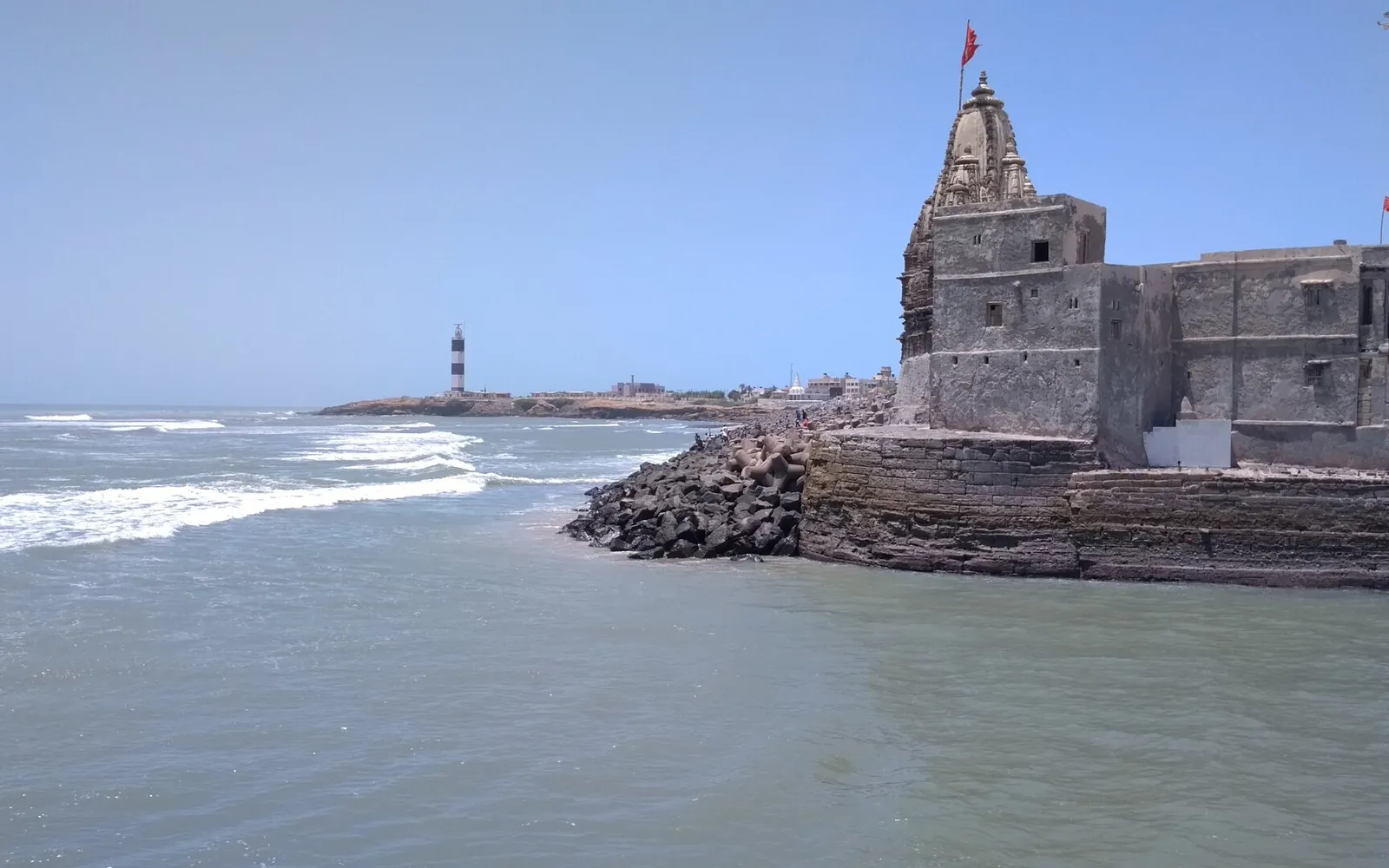
Bhadkeshwar Mahadev is one of Dwarka's most distinctive sacred sites, an ancient temple of Lord Shiva that stands on a naturally elevated rocky outcrop surrounded on all sides by the Arabian Sea. The name Bhadkeshwar is composed of two Sanskrit words: "Bhadra," meaning auspicious or blessed, and "Keshwar," a name for Lord Shiva meaning the Lord of all beings. Together, the name evokes the auspicious and all-encompassing power of Shiva, who governs the forces of nature including the mighty ocean that surrounds this temple.
The temple is believed to be extremely ancient, predating even the current structure of Dwarkadhish Temple, and is associated with the broader sacred geography of Dwarka. Local tradition holds that Lord Shiva himself chose this dramatic sea-surrounded location to reside, presiding over the ocean and watching over the city of Dwarka. The combination of a Shiva temple within a primarily Vaishnava pilgrimage city underscores the Hindu principle of the complementary nature of Shiva and Vishnu: devotees visiting both Dwarkadhish (a Vishnu form) and Bhadkeshwar Mahadev complete a holistic pilgrimage honouring both the great manifestations of the divine.
The temple structure is compact and sits close to the water level, with the sea visibly churning around the rocks on which it stands. At high tide, the temple island becomes completely surrounded by water, creating the awe-inspiring spectacle of a sacred shrine seemingly floating in the middle of the Arabian Sea. This dramatic natural phenomenon has made Bhadkeshwar Mahadev one of the most photographed and memorable sites in the entire Dwarka region, and a must-visit for every pilgrim and traveller who comes to the holy city.
"Bhadkeshwar Mahadev: where Lord Shiva chose the sea as his abode, and the Arabian Sea itself becomes his garment."
How to Reach Bhadkeshwar Mahadev Temple
Bhadkeshwar Mahadev Temple is conveniently located within Dwarka city itself, approximately 1 kilometre from Dwarkadhish Temple, an easy walk. From Dwarkadhish Temple, walk southward along the waterfront in the direction of the Dwarka Lighthouse. The lighthouse is a prominent landmark clearly visible from the temple area, and the path toward it will bring you to the coastal walk leading to Bhadkeshwar.
The approach to the temple involves walking along a concrete path or causeway that connects the mainland to the rocky island on which the temple stands. This path is fully accessible during low tide, when the sea recedes and leaves the rocky walkway exposed. The walk takes approximately 5 to 10 minutes from the mainland end of the causeway to the temple entrance. The path is generally well-maintained, though it can be slippery with seaweed during certain seasons, so wearing rubber-soled or waterproof footwear is advisable.
- From Dwarkadhish Temple Walk approximately 2 km southward toward the Dwarka Lighthouse
- By Auto-Rickshaw Short auto ride from any point in Dwarka city. Ask for "Bhadkeshwar Mahadev" or "Lighthouse"
- GPS Coordinates 22.2356° N, 68.9670° E (search "Bhadkeshwar Mahadev Temple Dwarka" on Google Maps)
- Tide Requirement Low tide is essential. Check local tide times before setting out
Best Time to Visit Bhadkeshwar Mahadev
The timing of your visit to Bhadkeshwar Mahadev is critically important because access depends entirely on the tidal conditions. Low tide typically occurs twice a day, and the precise times shift by approximately 50 minutes each day. Before visiting, check the local tide table. Your hotel staff, local residents or a simple internet search for "Dwarka tide times" will give you accurate information. The concrete path to the temple is usually accessible for approximately 3 to 4 hours around each low tide.
Of the two daily low tides, the late-afternoon or sunset low tide is by far the most recommended time to visit. The setting sun over the Arabian Sea, casting long golden shadows across the ancient stone temple while the sea glimmers with reflected light all around, is one of the most notable natural and spiritual vistas in Gujarat. Visiting at sunset also allows you to complete the experience by attending the Sandhya Aarti at Gomti Ghat or Dwarkadhish Temple, which typically begins around 6:30 to 7:00 PM, just a short walk away.
Early morning visits during low tide offer a completely different and equally beautiful experience: the peace of dawn, the cool sea breeze, the sound of waves around the rocks, and the rare opportunity for quiet, undisturbed prayer at the Shivalinga inside the temple. The temple priest is usually present from early morning for the morning aarti and continues through the morning hours.
- Best Experience Sunset during low tide: the Arabian Sea turns gold and orange around the temple
- Peaceful Alternative Early morning low tide: quiet, cool, excellent for personal prayer
- Season October to May is ideal. Avoid June to September (monsoon, rough seas)
- Tide Check Always verify low tide times locally on the day of your visit
What to See at Bhadkeshwar Mahadev
The main object of veneration inside Bhadkeshwar Mahadev Temple is a naturally formed Shivalinga housed in the inner sanctum (garbhagriha). The Shivalinga is anointed daily by the resident priest with milk, water, Bilva leaves and other traditional offerings. The sanctum is small and intimate, fitting only a few devotees at a time, which adds to the personal nature of the darshan experience. The sound of the sea surrounding the temple forms a constant natural backdrop to the prayers and chanting inside, creating a uniquely powerful atmosphere unlike any other Shiva temple.
Beyond the main deity, the visit to Bhadkeshwar offers several other remarkable sights. From the rocky platform around the temple, you have unobstructed 360-degree views of the Arabian Sea, a vast, shimmering expanse stretching to the horizon in every direction. The nearby Dwarka Lighthouse, a beautiful old structure dating to the colonial era, rises majestically nearby and can be climbed by visitors for a bird's-eye panoramic view of both the city and the sea. The concrete pathway itself, which appears to walk directly into the sea, is dramatic and photogenic. During low tide, the exposed rocks around the island reveal tidal pools teeming with marine life, a fascinating natural feature that adds to the uniqueness of this sacred site.
Important Tips for Visiting
-
1
Always Check Tide Times First
This is the single most important tip for visiting Bhadkeshwar Mahadev. The concrete path to the temple is submerged during high tide and visiting at the wrong time is both impossible and potentially dangerous. Ask your hotel reception for the day's low tide times, or search online for "Dwarka tide table" the evening before your planned visit.
-
2
Wear Waterproof or Rubber-Soled Footwear
The concrete path and the rocks around the temple can be wet and slippery with seaweed even during low tide. Wearing rubber-soled or waterproof footwear significantly reduces the risk of slipping. Remove your footwear only at the temple entrance, not on the wet pathway. Sandals with good grip are recommended over flat-soled chappals.
-
3
No Photography Inside the Sanctum
Photography and video recording are not permitted inside the main sanctum of Bhadkeshwar Mahadev Temple. However, photography is freely allowed on the rocky platform outside the temple and along the walkway, where the dramatic sea views and the spectacle of the temple surrounded by water make for excellent photographs. Always prioritise devotional respect over photography.
-
4
Avoid Visiting During Monsoon
During the monsoon season (June to September), the Arabian Sea is very rough, waves frequently wash over the concrete path even at low tide, and the visit becomes genuinely dangerous. The temple may also be officially closed during the most intense monsoon months. Plan your Dwarka yatra between October and May to enjoy Bhadkeshwar Mahadev safely.
-
5
Pair with Gomti Ghat Evening Aarti
Time your visit to Bhadkeshwar Mahadev to coincide with the late-afternoon low tide, so that you can watch the sunset from the temple and then walk directly to Gomti Ghat (only about 10 minutes away) for the Sandhya Aarti. Sunset at Bhadkeshwar followed by the Gomti Ghat aarti is the finest evening experience in Dwarka.
Frequently Asked Questions
Also Explore Dwarka
Dwarkadhish Temple
The Char Dham temple of Lord Krishna. 72 carved pillars, 43-metre shikhara and 8 daily aartis. The spiritual heart of Dwarka and the start of every pilgrimage.
Read Full GuideGomti Ghat Sandhya Aarti
Evening aarti at the Gomti River. After visiting Bhadkeshwar at sunset, walk to Gomti Ghat for the Sandhya Aarti ritual. Both experiences together make the perfect Dwarka evening.
Read Full GuideSudama Setu Bridge
Dwarka's suspension bridge over the Gomti River. Best views of the city and Dwarkadhish Temple spire. A short walk from Bhadkeshwar Mahadev along the coastline.
Read Full GuideBest Time to Visit Dwarka
Bhadkeshwar is most accessible October to February. Check our month-by-month guide for tide conditions, weather and the best season for coastal temple visits.
Plan Your Visit